
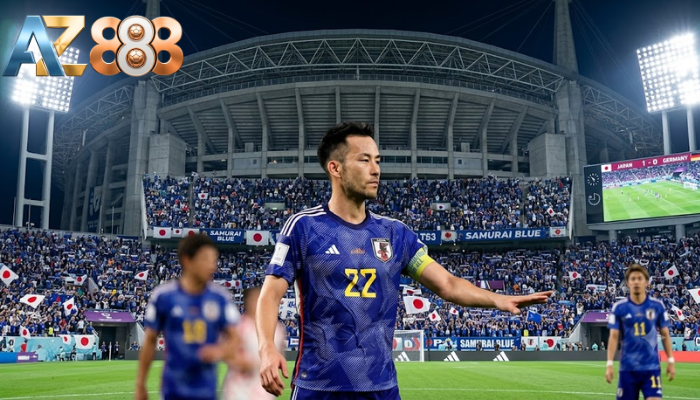
The landscape of international football has shifted dramatically as Asian defenders prove their worth in the most physically demanding leagues across Europe. Maya Yoshida stands as a primary figure in this movement, demonstrating a level of consistency that has inspired millions of young athletes across the continent. Much like the strategic precision found at AZ 888 for enthusiasts following live match data, his career has been defined by calculated risks and meticulous positioning. This veteran center-back has not only represented his nation with distinction but has also become a household name in the English Premier League and the Italian Serie A. His journey reflects a broader trend where Japanese players are no longer seen as niche additions but as essential components of high-performing tactical systems. Beyond that, his leadership qualities have set a new standard for what it means to captain a national team during periods of significant transition and pressure.
A significant portion of football historians point to the early 2010s as the turning point for Japanese defensive exports. Before this era, the focus was almost entirely on creative midfielders and clinical attackers who could provide flair. In addition, the brand of football played in the J-League began to emphasize structural integrity, allowing players like the former Southampton man to flourish. For those who follow the analytical side of the game, the rise of such players coincides with the increased global accessibility of Asian sports markets, often highlighted by platforms like AZ 888 which track these developmental milestones. Notably, the physical transition from the domestic league in Japan to the Eredivisie in the Netherlands served as the perfect testing ground for his future endeavors. This period of his career was essential for building the aerial dominance and ball-playing capabilities that would eventually define his decade-long stay in the top tiers of European competition.
How Maya Yoshida Transformed the Southampton Defense
The arrival of a Japanese center-back on the South Coast of England was initially met with curiosity rather than expectation. However, Maya Yoshida quickly silenced critics by showcasing an uncanny ability to read the game and organize a backline against world-class strikers. During his tenure at St Mary’s Stadium, he became a symbol of reliability, often stepping in during critical moments to secure vital points for the club. One thing very few actually pay attention to is the sheer longevity he maintained in a league known for its high turnover of foreign talent. His presence allowed the team to transition from a defensive posture to an offensive one with ease, thanks to his range of passing.
Another key aspect of his time in England was his integration into the local culture, which further solidified his status as a fan favorite. For those who analyzed his performance metrics, his interception rates and successful clearance statistics were consistently among the highest in the squad. In addition, his role in the club’s journey to a major cup final and consistent top-half finishes cannot be overstated. He provided a bridge between the tactical nuances of Asian football and the raw physicality of the English game. This blend of styles made him an invaluable asset for multiple managers who cycled through the club during his eight-year stay.
Tactical Versatility Under Different Managerial Regimes
The ability to adapt to various defensive philosophies is what separates good players from great ones. Throughout his English career, Maya Yoshida served under managers with vastly different approaches, ranging from high-pressing systems to deep-sitting defensive blocks. His intelligence allowed him to understand the specific demands of each coach, whether it was playing as a traditional center-back or occasionally filling in as a full-back. Beyond that, his communication skills on the pitch ensured that the defensive line remained synchronized even under immense pressure from elite opposition.
The Impact of Physical Conditioning on Premier League Success
Maintaining peak physical condition in the Premier League requires a level of dedication that few possess over a long period. Notably, his commitment to sports science and recovery allowed him to avoid the frequent injuries that often plague defenders in their late twenties. This durability was a significant factor in his ability to compete against some of the fastest and strongest forwards in the world. For those who followed his progress, it was clear that his off-field discipline was just as important as his on-field talent. This professional approach served as a blueprint for other Asian players looking to make their mark in the United Kingdom.
Leadership Roles Within the Samurai Blue National Team
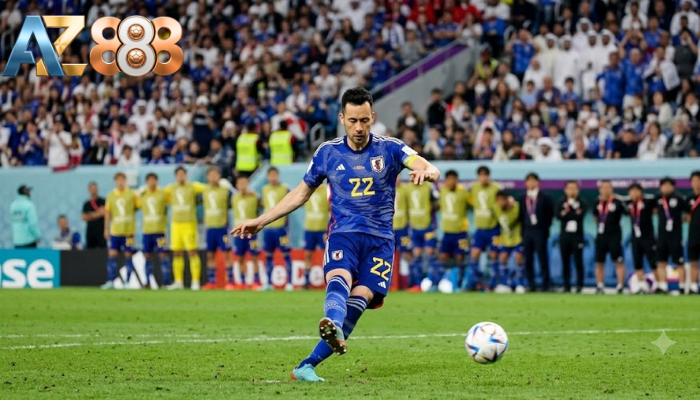
Stepping into the shoes of legendary figures to lead the Japanese national team is a task fraught with immense pressure. Maya Yoshida accepted this challenge with a sense of duty that resonated with fans across the globe. His captaincy was marked by a period of rejuvenation for the Samurai Blue, as he guided a younger generation through multiple World Cup cycles. A significant portion of his legacy is tied to his ability to maintain composure in the locker room and serve as a mentor to emerging talents. He understood that being a captain meant more than just wearing an armband; it required being the emotional and tactical anchor of the team.
In addition, his performances on the international stage often mirrored his club form, providing a sense of security to the Japanese midfield. Whether competing in the Asian Cup or on the world’s biggest stage in Qatar, he remained the focal point of the defense. Notably, his experience in Europe provided him with the insights necessary to counter the diverse playing styles of international opponents. This global perspective was instrumental in Japan’s tactical victories against traditional footballing powerhouses. His leadership ensured that the team never felt outmatched, regardless of the stature of the opposition they faced.
The Strategic Move to the Italian Serie A with Sampdoria
Many players opt for a less competitive environment as they enter the later stages of their careers, but the Japanese veteran chose the tactical rigors of Italy. Joining Sampdoria offered a new challenge in a league renowned for its emphasis on defensive artistry. Maya Yoshida adapted remarkably well to the slower, more cerebral pace of Serie A, where positioning is often valued more than raw speed. This move proved that his skill set was not league-dependent but was instead rooted in a fundamental understanding of the game. His time in Genoa was characterized by a series of disciplined performances that helped the club maintain its mid-table stability.
Another key aspect of his Italian journey was the respect he earned from local supporters and teammates alike. In a country that prides itself on producing world-class defenders, his technical proficiency was highly regarded. One thing very few actually pay attention to is how his presence helped expand the reach of Italian football into the Asian market. Platforms like AZ 888 saw increased interest in Serie A fixtures as Japanese fans followed their captain’s progress in a new environment. This cross-cultural impact is a testament to his status as a global ambassador for the sport, bridging the gap between different footballing traditions.
Final Reflections on a Distinguished Career Path
As the sun begins to set on a remarkable professional journey, the influence of this defensive stalwart remains visible across the footballing world. Maya Yoshida has proven that with the right combination of technical skill, mental fortitude, and professional discipline, Asian players can reach the very pinnacle of the sport. His career serves as a roadmap for future generations, illustrating that success in Europe is attainable through persistence and adaptability. Beyond that, his transition to the Major League Soccer in the United States represents a final chapter focused on growing the game in new territories.
Conclusion
The legacy he leaves behind is one of breaking barriers and setting high standards for others to follow. For those who have supported him from his early days in Nagoya to his stints in London, Genoa, and beyond, he remains a symbol of national pride. In addition, his contributions to the sport have helped elevate the perception of Japanese football on the global stage. Much like the reliable and transparent systems found at az888.br.com for those tracking sports outcomes, his career has been a model of consistency and integrity. He remains a vital figure for anyone interested in the evolution of the modern defender. Create your account today to track the development of new athletes following his path.