
Winter can transform a backyard gazebo into a comfortable outdoor retreat, but snow accumulation raises an important question: how much weight can the roof safely support? For homeowners considering hardtop gazebos, understanding snow load ratings is essential, especially in regions with heavy snowfall, freezing temperatures, and repeated winter storms. While galvanized steel roofing offers durability and corrosion resistance, its ability to withstand snow depends on more than the roofing material alone.
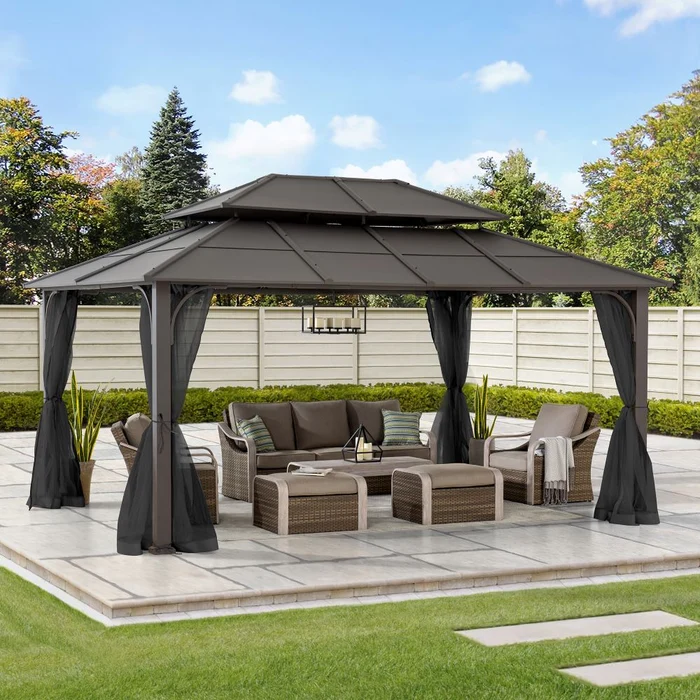
What Does a Hardtop Gazebo Snow Load Rating Mean?
A hardtop gazebo snow load rating indicates how much snow weight a structure is designed or tested to withstand under specified conditions. It is commonly expressed in pounds per square foot (psf), describing the load distributed across a roof rather than the total weight of snow in the backyard.
However, a published rating should not automatically be interpreted as a guarantee of safety under every winter condition. Roof design, frame strength, support posts, connections, and installation quality all affect how a gazebo handles accumulated snow.
When comparing hardtop gazebos, look for manufacturer-provided snow load specifications and clarify whether they represent a tested capacity, a design value, or another stated limit. If a product does not publish a verified snow load rating, avoid assuming it can support a particular depth of snow based on appearance alone.
Static Snow Load vs. Wet Snow Load: Why Weight Matters
Snow depth is only part of the equation. Its density and moisture content determine how much weight accumulates on a roof.
Static snow load refers to the weight of snow resting on a structure. Wet snow typically contains more water and is considerably heavier than the same volume of dry, fluffy snow. Consequently, a relatively shallow layer of wet snow may impose a greater load than a deeper layer of light powder.
For example, consider a hypothetical gazebo roof with a verified capacity of 20 psf. A uniform snow layer weighing 15 psf would fall below that stated capacity, while a layer weighing 25 psf would exceed it. These figures illustrate how load ratings work; they are not a recommended operating threshold for any particular gazebo.
The distinction between wet snow vs. dry snow on a gazebo roof becomes especially important during late-winter storms, when rising temperatures cause snow to absorb moisture or partially melt. Refreezing can also create additional ice accumulation. Because snow density varies significantly, there is no universal snow depth that guarantees a gazebo roof will remain within its rated capacity.
Can a Galvanized Steel Gazebo Roof Handle Heavy Snow?
Galvanized steel is steel coated with zinc to help protect against corrosion. This protective layer can help a gazebo roof withstand outdoor exposure, including moisture and changing weather conditions.
However, corrosion resistance and structural load capacity are two different things. A galvanized steel roof is not automatically capable of supporting heavy snowfall simply because the material is strong.
The entire gazebo assembly matters. Roof panels, beams, joints, brackets, posts, and the anchoring system work together to transfer weight safely to the ground. A weakness in any component can affect overall performance. Roof shape and geometry also influence how snow accumulates and distributes across the structure.
When evaluating SUNJOY hardtop gazebos, review the specifications for the specific model you are considering. You can explore available designs in the SUNJOY Hardtop Gazebos collection. For properties in snowy climates, prioritize clearly documented structural information over assumptions based on roof material or appearance.
How to Choose the Best Hard Top Gazebo for Winter
The best hard top gazebo for your backyard depends on local weather, intended use, and the manufacturer’s specifications.
Start by checking local snow conditions and building requirements. Areas that experience frequent heavy snowfall may require more careful structural evaluation than regions with occasional light snow. Remember that local design snow loads are not necessarily equivalent to a consumer gazebo’s rated capacity.
Next, review the product documentation. Look for an explicit snow load rating, installation instructions, anchoring requirements, and guidance on winter maintenance. If the rating is unavailable or unclear, contact the manufacturer before purchasing.
Consider roof design and drainage as well. A roof that sheds snow differently from another design may experience different load patterns, but no shape should be assumed safe without supporting specifications. Proper assembly on a stable, suitable foundation is equally important.
Finally, understand the manufacturer’s winter-use guidance. Some gazebos may require snow removal or seasonal precautions. Follow the instructions for your specific model rather than relying on general assumptions about steel construction.
Practical Winter Care for Your Gazebo
Regular winter checks can help identify accumulating snow, ice buildup, loose connections, or visible structural changes. Follow the manufacturer’s recommendations for snow removal and never climb onto a snow-covered gazebo roof unless the manufacturer explicitly provides a safe procedure.
If snow accumulation approaches a stated limit, or you notice bending, unusual movement, or other signs of structural distress, keep people away from the structure and seek appropriate professional guidance. Do not wait for visible damage before taking winter conditions seriously.
Make an Informed Choice for Every Season
A galvanized steel roof can offer durability and corrosion protection, but the amount of winter snow a gazebo can support depends on its complete structural design and verified load rating. Understanding the difference between static load and the added weight of wet snow helps homeowners make better purchasing and maintenance decisions.
Before choosing among SUNJOY hardtop gazebos, compare model-specific specifications, consider your local winter conditions, and follow the manufacturer’s guidance. With realistic expectations and proper care, you can select an outdoor shelter that better suits your backyard and seasonal needs.